


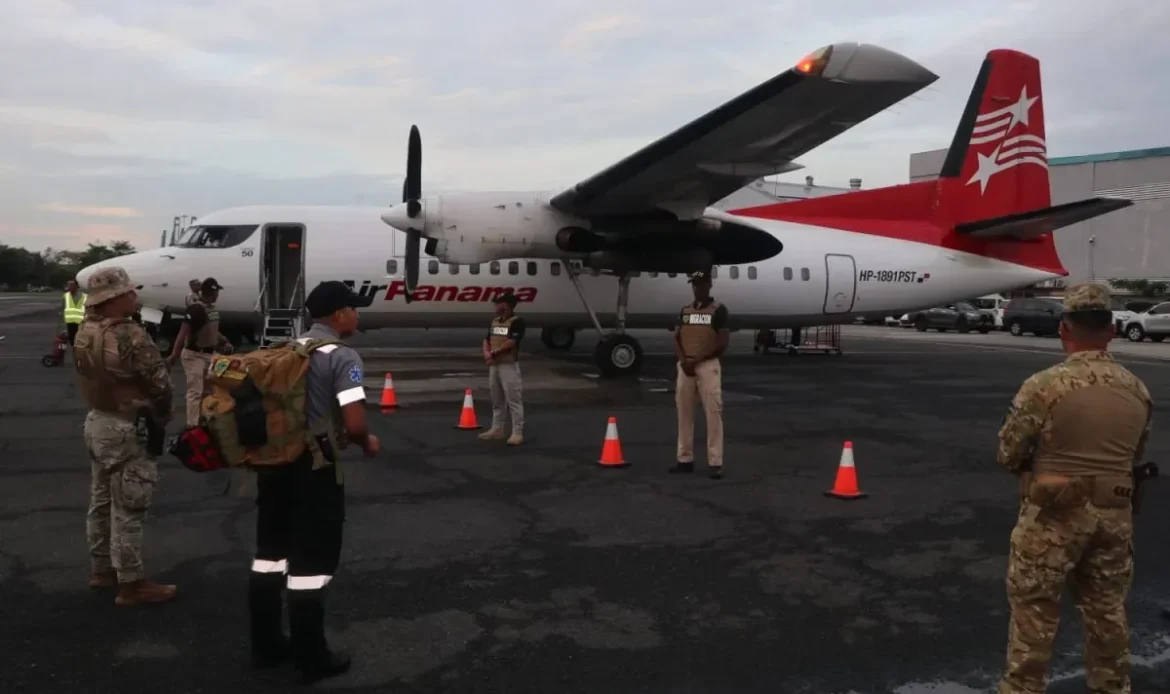
Panama migration enforcement operations have led to the orderly repatriation of 2,867 foreign nationals since November 2025, according to official figures. The latest chapter in this sustained effort unfolded with a deportation flight to Managua that carried 20 Nicaraguan citizens, highlighting a strategy that now touches multiple continents.
Panama Migration Enforcement Strategy Since August 2024
The National Migration Service has orchestrated 71 removal flights in just over eight months, a pace that averages more than eight departures per month. Officials say the flights stick to strict legal frameworks, with every case backed by formal resolutions. That volume signals a decisive shift toward faster processing of irregular migration cases, something regional observers have been tracking closely.
While the bulk of those repatriated came from neighboring Colombia, Ecuador and Nicaragua, the manifest lists also include destinations in South America, Asia and Africa. Such geographic reach demands heavy interinstitutional coordination, and the migration agency credits joint work with foreign consulates and security bodies for keeping the logistics running without major hiccups.
One Flight, Two Legal Categories
The Managua-bound operation shed light on how Panama distinguishes between deportation and expulsion. Eighteen of the 20 Nicaraguans on board were deported because they had overstayed their permits or deliberately bypassed immigration checkpoints. These cases, while serious, fall under administrative infractions.
The two remaining individuals faced expulsion, a more stringent measure reserved for graver circumstances. One person had sneaked back into the country after a previous deportation, a move that authorities treat as a red line. The other was removed over threats aimed at public security personnel, a factor that elevates the case from a simple migration violation to a public order concern.
“Repatriation flights are not just about numbers. Each person on board represents a file that was reviewed under due process, and we apply the measure that corresponds strictly to the facts on record,” a National Migration Service spokesperson explained. [Translated from Spanish]
Where Panama Migration Enforcement Pushes Beyond the Americas
It is easy to assume most removals would land in nearby capitals, and the data partly bears that out. Colombia and Ecuador top the destination list, followed closely by Nicaragua. But the operation’s true scope becomes clearer when flights veer toward nations in Asia and Africa, making Panama’s migration enforcement one of the more geographically varied programs in the hemisphere.
Those long-haul removals demand complex coordination with airlines and receiving governments, and officials say the diplomatic machinery required is often underestimated. Still, the migration service insists that distance does not dilute the legal principle. Every passenger, whether bound for a three-hour flight or an intercontinental journey, departs under the same rigorous standard of documentation and escort protocol.

What the Enforcement Wave Signals for Regional Mobility
With nearly 3,000 people repatriated since last August, the enforcement tempo is bound to influence how migrants and smugglers calculate risk. The message is unambiguous: overstaying a visa or dodging a checkpoint will likely trigger removal, and criminalizing re-entry or threatening security forces escalates the consequences quickly. That posture aligns with a broader regional hardening, as several Central American nations tighten controls amid shifting migration flows.
At the same time, the heavy reliance on flights rather than ground returns raises questions about cost and sustainability. Officials have not detailed the financial footprint, but they frame the expense as an investment in orderly migration. As the numbers continue to climb, the National Migration Service remains focused on what it calls a predictable and lawful system, one deportation flight at a time.