

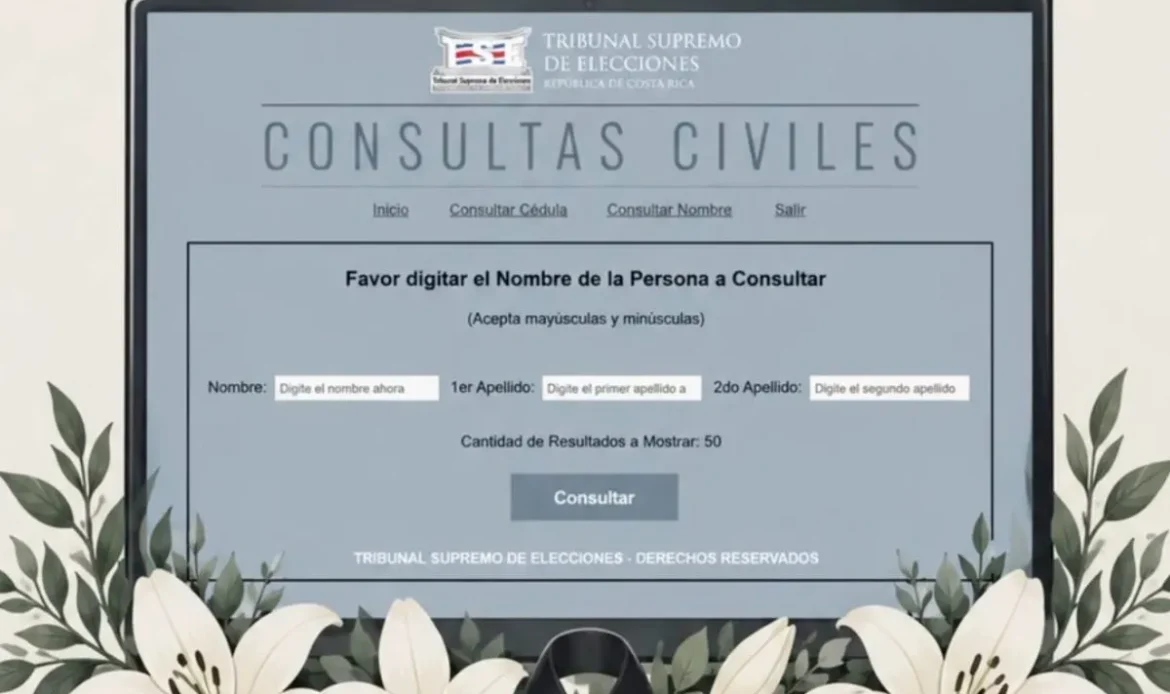
Costa Rica’s Supreme Electoral Tribunal (TSE) began requiring user accounts and passwords Friday to access its civil registry access database, a move that removes open public access to sensitive personal details including family relationships, home addresses, and biometric data. The new authentication system took effect October 9, fundamentally changing how citizens, journalists, and researchers query the country’s civil records.
The TSE said the restrictions aim to balance legitimate public access with protections against misuse of personal information. Under the new rules, anyone seeking civil registry access must first register as an adult individual and create non-transferable credentials, even when conducting searches on behalf of an institution or organization.
What Data Disappears From Public View at Civil Registry Access
The general access profile now displays only unrestricted data needed to identify a person and verify their existence, marital status, or registry condition. Previously visible information about children, parents, residential addresses, and third parties connected to marriages, divorces, judicial separations, or widowhood will no longer appear in open searches.
Also removed from public display are fingerprints, signatures, photographs, biometric data, phone numbers, email addresses, causes of death, health information, and organ donation records. The TSE established a precautionary principle, directing that when reasonable doubt exists about whether data should remain openly accessible, the most restrictive access level applies by default.
Registration Process and Expanded Access for Professionals
Costa Rican adults can create accounts through the TSE’s external user self-registration system. The process requires identity verification, acceptance of service terms, and establishment of login credentials. Individuals whose institutional records contain outdated information must update their data before completing registration.
The regulation establishes differentiated profiles for professionals, institutions, organizations, and public officials who need broader access to fulfill legally assigned functions. These expanded permissions may include family relationship data and third-party information unavailable through general profiles. Applicants must demonstrate legal purpose, necessity, and proportionality, with final approval resting with the Civil Registry’s General Directorate.

Tracking Who Queries Personal Records
A significant change accompanies the new restrictions, the TSE will maintain logs of all civil registry queries. The system records who performed each search and when, allowing the institution to reconstruct access patterns. Data subjects can request reports showing who consulted their information during specific periods by proving their identity and indicating the relevant timeframe.
The regulation also establishes potential administrative, civil, criminal, disciplinary, or professional liability when authorities determine information was misused. The TSE first ordered its technology and civil registry directorates to develop the authentication system in July 2026, directing them to anonymize marriage and divorce data, exclude children’s information from open queries, and create differentiated access profiles. The formal regulation was approved in August.
The shift represents a key significant changes to Costa Rica’s public records accessibility in recent years, reflecting growing regional concern about personal data protection while preserving the registry’s core function as a public verification tool.