
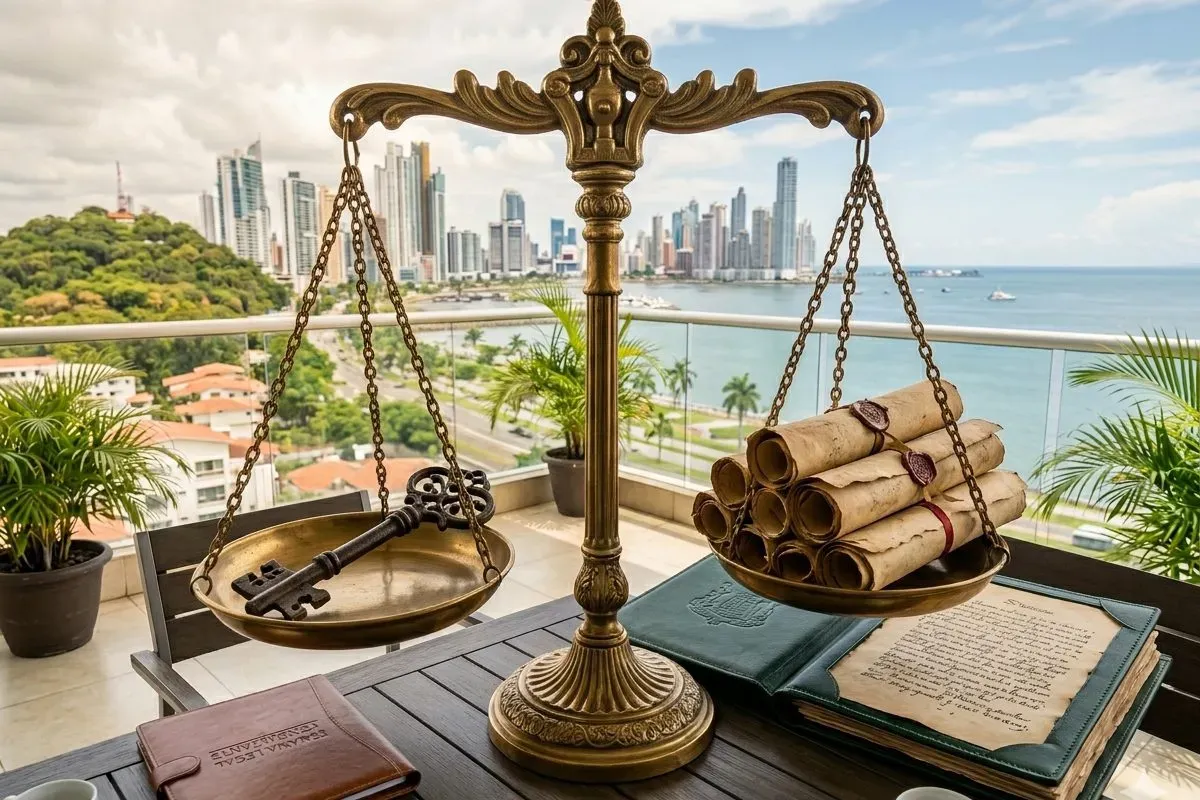

Panama Rights of Possession Land Tenure
Foreign investors and retirees in Panama are increasingly turning to Rights of Possession land as a cost-effective alternative to titled property. This unique land tenure system allows buyers to use and improve land without paying property taxes. The concept traces its roots back to Spanish colonial rule and remains common throughout much of Panama today.
Rights of Possession land tenure represents a legal framework where the government holds the official title. But the occupant holds all usage rights. This arrangement often makes North American buyers uneasy at first. The system is actually quite similar to how land functioned in feudal England. It’s simply a different approach to property rights.
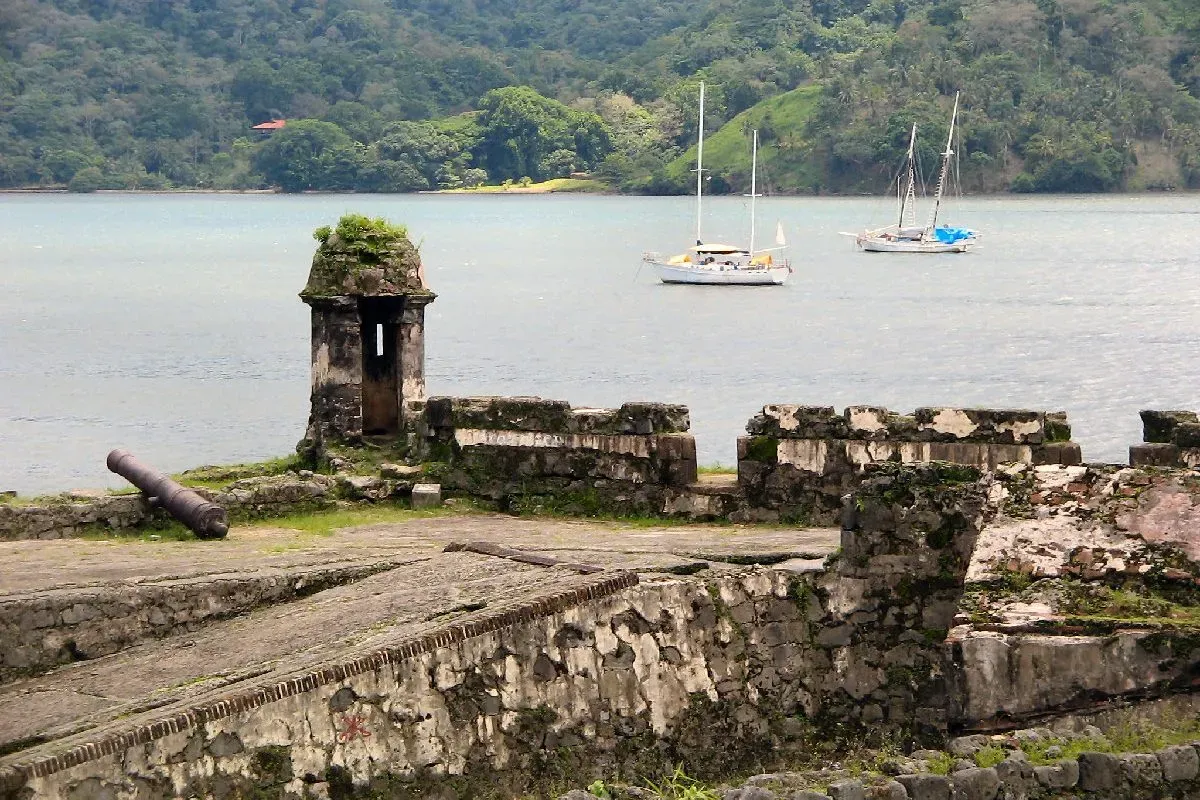
Ruins and Bay at Portobelo, Panama By Tedder, CC BY 3.0, https://commons.wikimedia.org/w/index.php?curid=7491459
Historical Origins of Panama’s Land System
Before the Spanish arrived, Panama’s indigenous people used land collaboratively. Nobody owned it in the modern sense. Then the Spanish Crown declared all land belonged to Spain. The Crown only cared about the route from Colon to Panama City. That route served as a critical port for global trade.
In the interior regions, the Crown maintained the communal tradition. They sold some land to villages for collective ownership. Large tracts went to favored subjects as royal grants. On the remaining land, the Crown recognized the right of small farmers to use the property. They could not own it outright. This arrangement mirrored feudal England where the monarch allowed land usage in exchange for loyalty.
When Spain left 300 years later, all that untitled land passed to the new Panama government. The government asked citizens to title their land by proving their claims. Very few people bothered. Getting title was expensive and slow. Even wealthy families skipped the process. Once you title property, you must start paying property taxes and capital gains taxes.
Panama land titling history shows that most land remains untitled to this day. The government holds the title while citizens hold usage rights. The system continues much as it did during colonial times.
How Rights of Possession Differs From Titled Property
Three major differences separate ROP from titled property. First, buyers must conduct more upfront research. Second, owners must maintain or improve the property to show ownership. Third, no taxes are levied on ROP land.
“You can use the property any way you want, just as if you held title to the land,” said a Panama real estate specialist who works with foreign buyers. “You own the right to use the land, just as if you had the title. But because you don’t own the title, you don’t have to pay taxes.”
Required Research Before Buying ROP Property
ROP properties are not registered with the state.
Buyers must verify that the seller actually owns the usage rights.
This requires careful investigation of ownership trails and documentation.
Experienced sellers complete this research for buyers. They go through an extensive investigative process. They ensure clear ownership trails exist. They gather collaborative documentation for all ROP properties. Buyers can avoid the legwork by purchasing from established sellers who have already done the work.
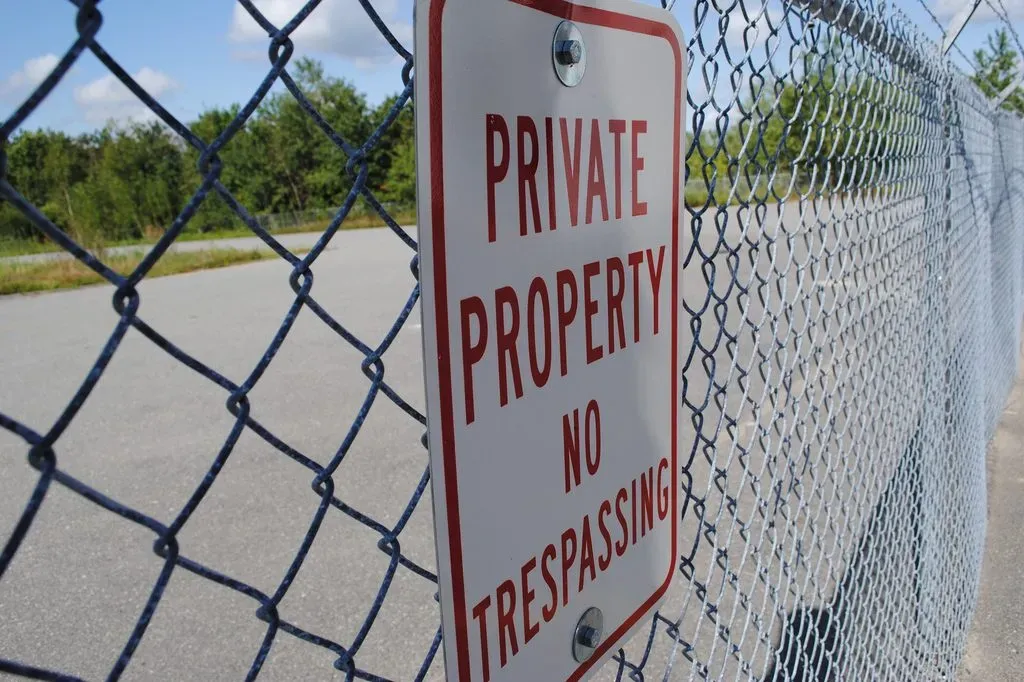
“Private Property” sign on a chain link fence By David Lotito – https://www.flickr.com/photos/43354699@N02/4887683759/in/photolist-8rUE6D-cgRJHS-89crWV-a2UaZQ-dTQTWr-9roudH-aZNq4P, CC BY 2.0, https://en.wikipedia.org/w/index.php?curid=40141127
Required Maintenance and Physical Claims
ROP owners must physically claim their property in noticeable ways. Something that signals new ownership has arrived. Industry experts recommend immediately putting up a fence. If a fence already exists, paint it. At minimum, have someone visit regularly to cut the grass.
“You don’t have to be there yourself,” one property specialist explained. “The fact that you are hiring someone to cut the grass is enough. You are establishing that you are the new owner, the person that holds the right to use the property.”
Building a rancho or any structure also works. These activities establish ownership. If a legal challenge arises, the court asks for proof of ownership. That is when owners present their evidence of activity. Longtime ROP owners put up fences on all their properties and maintain them. They also get to know their neighbors. This creates certainty about who owns the property.
That certainty of ownership passes entirely to the buyer when purchasing from established sellers.
Maintenance Applies to Titled Property Too
Titled property owners must also keep an eye on their land. If someone uses your land for 10 years in good faith, they can gain title. That means they didn’t know you owned it. If they use it for 15 to 20 years in bad faith, they can also gain title. Bad faith means they knew you owned it but ignored that fact.
This same principle applies in the United States. One American family lost part of their land because they allowed a neighbor to garden a section for years. When they went to sell, they faced a legal battle to keep the garden as part of their land. They lost. The neighbor continues gardening that strip. The family sold their property minus that section and never received compensation.
Property owners can avoid this loss in both Panama and the US. Simply have the people using your land sign a document. The document should state they are using the land on a temporary basis. A rental agreement works even better, even if only for a nominal fee. This precaution works for both ROP and titled land.
Eminent Domain also applies to both systems. Governments can take property for public use with fair compensation. This happened in the United States when politicians debated whether government could take land to build a parking lot. The same principle applies in Panama.
Tax Advantages of Rights of Possession Property
ROP property is excluded from property taxes entirely. It is also excluded from all land transaction taxes. This includes capital gains taxes and transfer fees. These exemptions create significant savings for property owners over time.
For buyers looking to understand the full process of acquiring property in Panama, a comprehensive guide called Property Demystified provides detailed information about both ROP and titled property options.
property tax
Selling ROP Property and Making Money
ROP property can be sold just like titled property. The sale transfers usage rights to the new owner. The government continues holding the title. The new owner assumes the same rights and responsibilities. They must maintain the property and pay no taxes.
The market for ROP property continues growing. Foreign buyers increasingly recognize the value proposition. They get land they can use and improve. They pay no property taxes. They face no capital gains taxes when selling. The only requirement is maintaining the property and establishing ownership through visible activity.
Industry experts recommend that buyers work with experienced sellers. These sellers have already completed the research. They have established clear ownership trails. They have collaborative documentation ready. This eliminates the risk of purchasing from someone who does not actually hold the usage rights.
The system works because it has worked for centuries. From Spanish colonial times through modern Panama, Rights of Possession has provided a stable framework for land usage. It continues to offer an accessible path to property ownership for both Panamanians and foreign investors alike.
